The loop the business runs on, the path a reader takes to becoming a customer, and what the next twelve months ship.
The flywheel
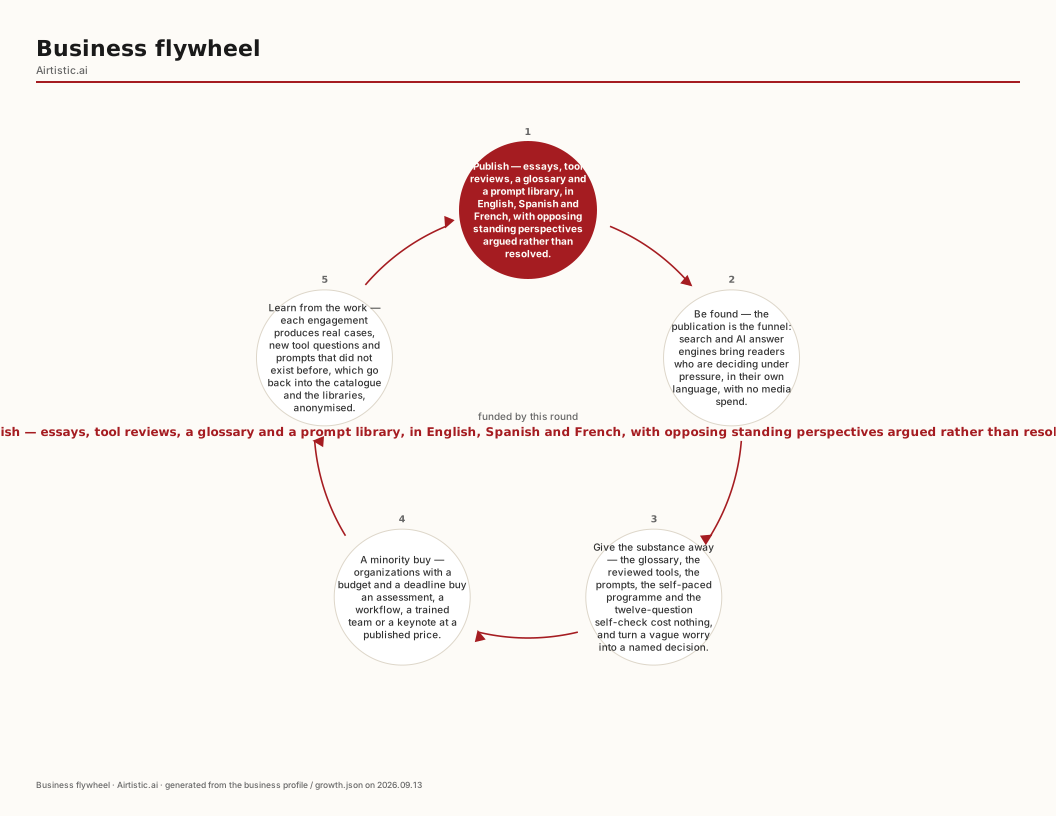
Five stages, each feeding the next. The publication is not marketing for the business — it is the first stage of it.
1
Publish — essays, tool reviews, a glossary and a prompt library, in English, Spanish and French, with opposing standing perspectives argued rather than resolved.
Funded by this round
2
Be found — the publication is the funnel: search and AI answer engines bring readers who are deciding under pressure, in their own language, with no media spend.
3
Give the substance away — the glossary, the reviewed tools, the prompts, the self-paced programme and the twelve-question self-check cost nothing, and turn a vague worry into a named decision.
4
A minority buy — organizations with a budget and a deadline buy an assessment, a workflow, a trained team or a keynote at a published price.
5
Learn from the work — each engagement produces real cases, new tool questions and prompts that did not exist before, which go back into the catalogue and the libraries, anonymised.
The round buys the first stage. Product (35%) makes the paid tiers purchasable and editorial (20%) keeps the three live languages current and brings a staged language through — which is what keeps the loop turning rather than decaying.
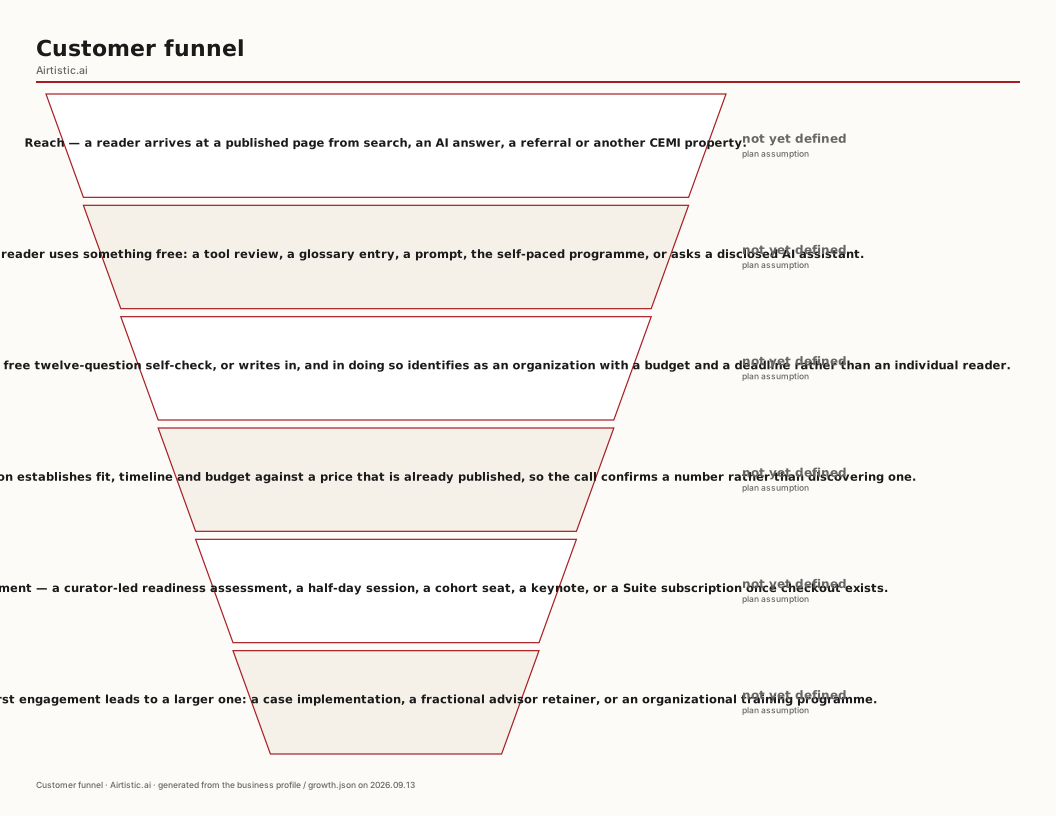
From first contact to a paying engagement to expansion.
Stage
Figure
Basis of the figure
1. Reach — a reader arrives at a published page from search, an AI answer, a referral or another CEMI property.
—
plan assumption
2. Engage — the reader uses something free: a tool review, a glossary entry, a prompt, the self-paced programme, or asks a disclosed AI assistant.
—
plan assumption
3. Declare — the reader completes the free twelve-question self-check, or writes in, and in doing so identifies as an organization with a budget and a deadline rather than an individual reader.
—
plan assumption
4. Scope — a conversation establishes fit, timeline and budget against a price that is already published, so the call confirms a number rather than discovering one.
—
plan assumption
5. First paid engagement — a curator-led readiness assessment, a half-day session, a cohort seat, a keynote, or a Suite subscription once checkout exists.
—
plan assumption
6. Expand — the first engagement leads to a larger one: a case implementation, a fractional advisor retainer, or an organizational training programme.
—
plan assumption
No conversion figure is published at any stage. Airtistic.ai is pre-revenue and publishes no analytics, so every stage below is named and its figure reads “plan assumption” — the honest state of the record, not a gap in the page. Figures will be filled in from the company’s own records as they exist.
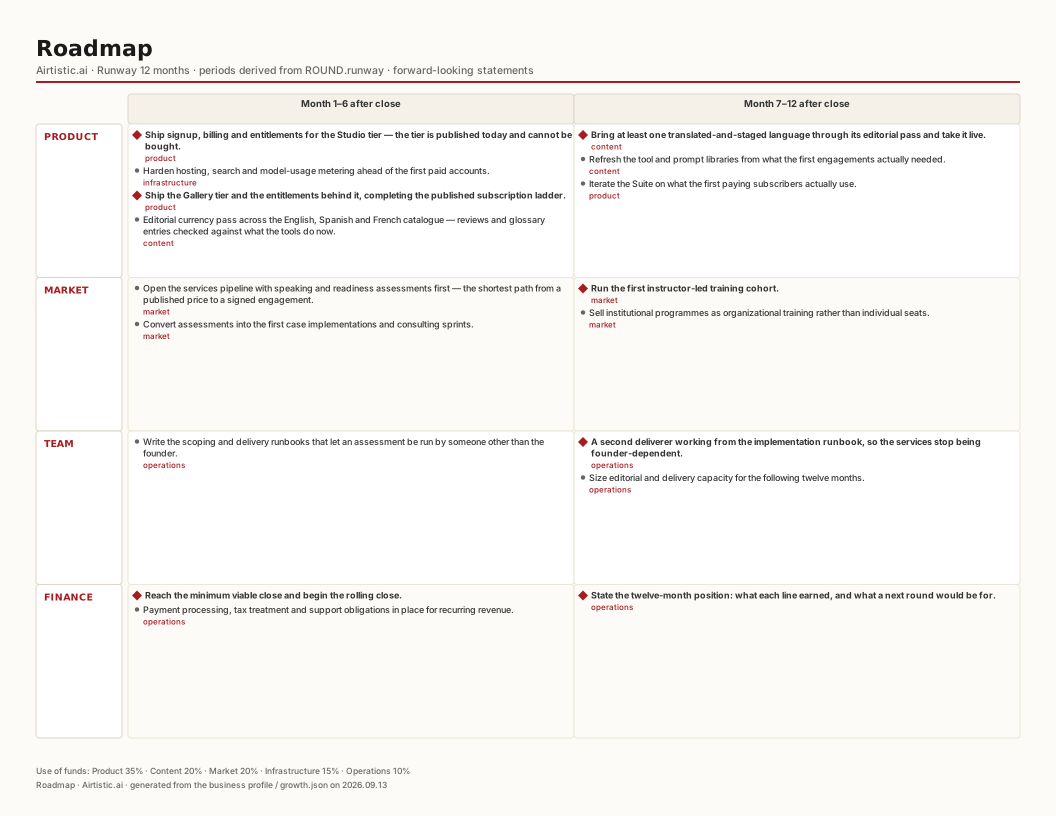
Two six-month periods — the twelve months of runway the full ask buys — with each item tied to the use-of-funds line that pays for it.
Month 1–6 after close
Month 7–12 after close
Product
Milestone Ship signup, billing and entitlements for the Studio tier — the tier is published today and cannot be bought. Use of funds: Product and paid tiers — 35% · US$35,000
Harden hosting, search and model-usage metering ahead of the first paid accounts. Use of funds: Infrastructure — 15% · US$15,000
Milestone Ship the Gallery tier and the entitlements behind it, completing the published subscription ladder. Use of funds: Product and paid tiers — 35% · US$35,000
Editorial currency pass across the English, Spanish and French catalogue — reviews and glossary entries checked against what the tools do now. Use of funds: Editorial and localization — 20% · US$20,000
Milestone Bring at least one translated-and-staged language through its editorial pass and take it live. Use of funds: Editorial and localization — 20% · US$20,000
Refresh the tool and prompt libraries from what the first engagements actually needed. Use of funds: Editorial and localization — 20% · US$20,000
Iterate the Suite on what the first paying subscribers actually use. Use of funds: Product and paid tiers — 35% · US$35,000
Market
Open the services pipeline with speaking and readiness assessments first — the shortest path from a published price to a signed engagement. Use of funds: Go-to-market — 20% · US$20,000
Convert assessments into the first case implementations and consulting sprints. Use of funds: Go-to-market — 20% · US$20,000
Milestone Run the first instructor-led training cohort. Use of funds: Go-to-market — 20% · US$20,000
Sell institutional programmes as organizational training rather than individual seats. Use of funds: Go-to-market — 20% · US$20,000
Team
Write the scoping and delivery runbooks that let an assessment be run by someone other than the founder. Use of funds: Operations — 10% · US$10,000
Milestone A second deliverer working from the implementation runbook, so the services stop being founder-dependent. Use of funds: Operations — 10% · US$10,000
Size editorial and delivery capacity for the following twelve months. Use of funds: Operations — 10% · US$10,000
Finance
Milestone Reach the minimum viable close and begin the rolling close. Use of funds: not funded by a use-of-funds line
Payment processing, tax treatment and support obligations in place for recurring revenue. Use of funds: Operations — 10% · US$10,000
Milestone State the twelve-month position: what each line earned, and what a next round would be for. Use of funds: Operations — 10% · US$10,000
Every item above is forward-looking and is identified as such. Periods are relative to close; no calendar date is published, because the close is rolling and its date is not set.


Comments
Sign in to comment